Do Camels Store Water in Their Humps?
No. A camel's hump is a store of fat, not water. The real secret to going days without a drink is in the camel's blood, kidneys and nose.
 Watch the short videoProfessor Chalk on YouTube
Camels look like they are carrying water tanks on their backs, and many people grow up believing the hump is full of water. It is one of the most common animal myths. The truth is more interesting: the hump holds fat, and a camel's water is kept in its body and blood.

The hump is a fat store
A camel's hump is a reservoir of fatty tissue. It works like a packed lunch. When food is scarce, as it often is in the desert, the camel can break down that fat for energy. A camel that has gone a long time without enough food has a smaller, floppier hump, because it has used up some of its reserve.
Keeping the fat in one place on the back also helps in the heat. If the same fat were spread under the skin all over the body, it would act like a blanket and keep heat in.
Can fat turn into water?
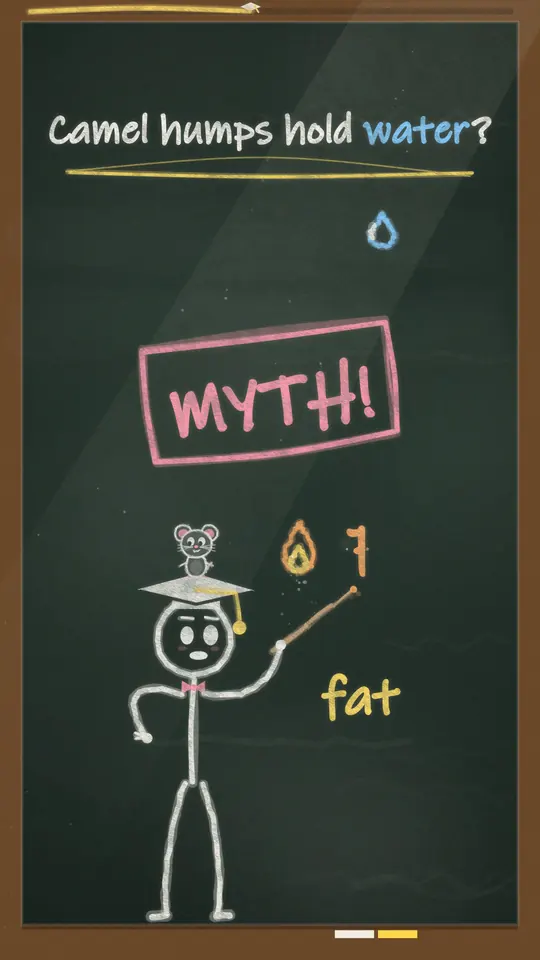
Here is the twist that probably started the myth. When an animal burns fat for energy, the chemistry produces water as a by-product. In fact, burning fat yields a greater mass of water than the mass of fat used up.
But this does not make the hump a water tank. Burning that fat needs oxygen, and breathing in dry desert air makes water evaporate from the lungs. Overall, in a dry climate, the camel loses more water by breathing than the fat gives back. The fat is an energy store, not a hidden drink.
Where the water really goes
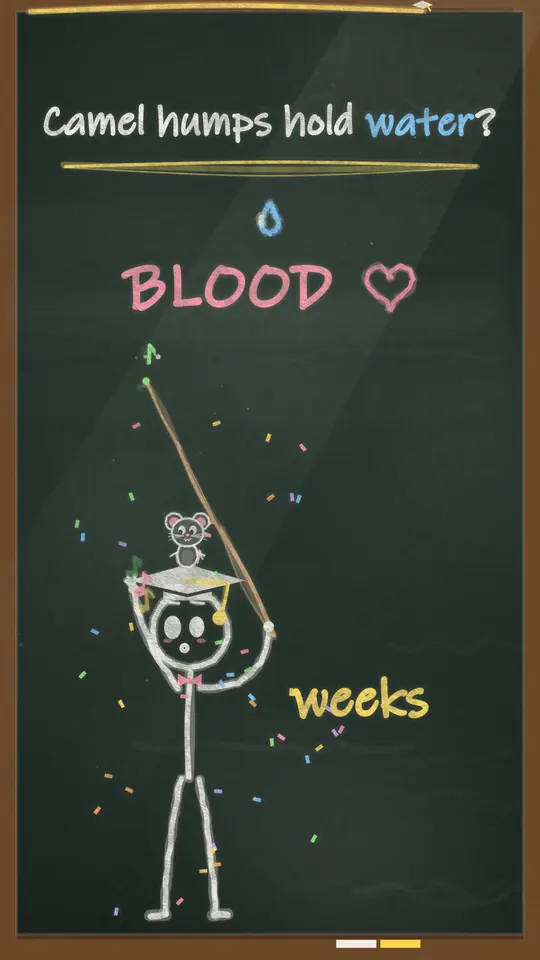
When a camel does drink, it drinks a lot: as much as 140 litres (about 30 imperial gallons) at a time. That water does not go into the hump. It goes into the bloodstream and the body's tissues.
Camels have unusual red blood cells to cope with this. In most mammals they are round, but camel red blood cells are oval. This shape helps the blood keep flowing when the camel is dehydrated and the blood gets thicker. The cells can also survive a huge rush of water after a long drink without bursting, which would be dangerous for most animals.
Built to waste almost nothing
The camel's real superpower is saving the water it has:
- It can lose a lot of water and survive. Camels can withstand losing about a quarter of their body weight in water. Most mammals can only handle about 12 to 14% before it becomes deadly.
- Its body temperature can swing. It may be about 34 °C (93 °F) at dawn and rise to about 40 °C (104 °F) by sunset, then cool down at night. Camels rarely sweat, even when the air reaches 49 °C (120 °F).
- Its kidneys hold water back. Camel urine comes out as a thick syrup, and its droppings are so dry they can be burned as fuel without drying.
- Its nose recycles water. Water vapour in its breath is trapped in its nostrils and taken back into the body.
Together, these tricks mean a camel can go as long as ten days between drinks, even in very hot weather.
The short answer
Do camels store water in their humps? No. The hump is fat for energy when food runs low. The water is in the blood and body, and the camel is built to waste almost none of it. Fat for energy, blood for water: one brilliant desert animal.