Why Soda Cans Don't Explode (Even Though the Wall Is Paper-Thin)
The wall of a soda can is about 0.1 mm thick, roughly a sheet of paper, yet cans are designed to hold about 90 psi. A domed bottom, a seamless body and a harder lid make it work.
 Watch the short videoZaDepth on YouTube
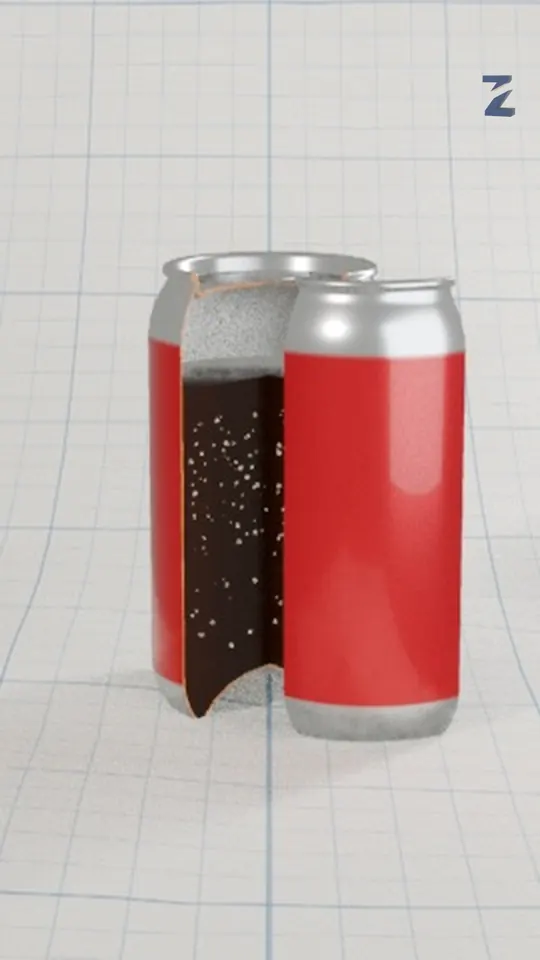
Pick up a soda can and squeeze it gently. The wall feels flimsy, and it is: the side of a typical aluminum can is only about 0.1 millimeters thick, roughly the same as a sheet of copy paper. Yet a sealed can is designed to hold about 90 pounds per square inch (psi) of pressure, nearly three times the air pressure in your car's tires. So why doesn't it burst?
Thinner than you think
Can bodies start as aluminum sheet about 0.3 mm (0.012 inches) thick. During manufacturing the side wall is stretched and thinned to about 0.1 mm (0.004 inches). That is about the thickness of ordinary 20 lb copy paper.
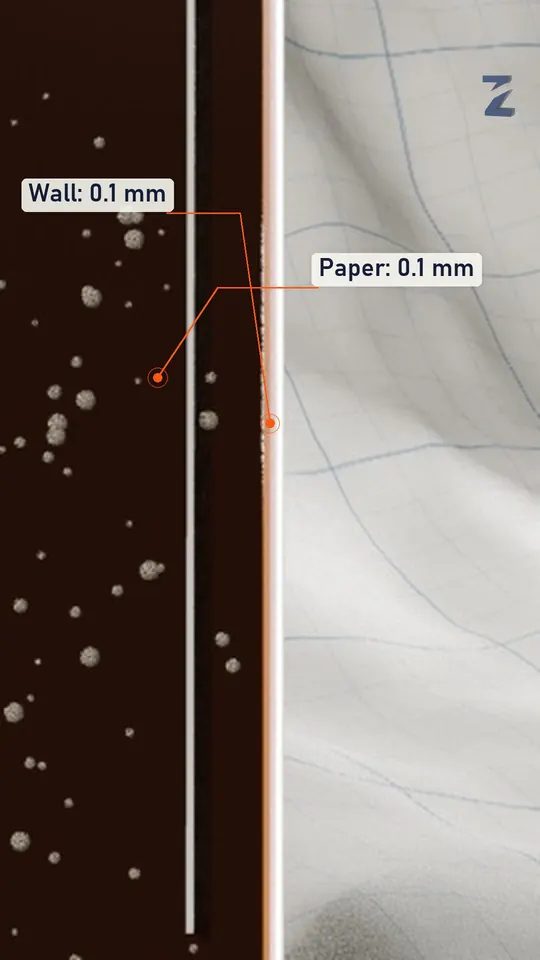
Thin walls save metal, weight and money on billions of cans. The challenge is making such a thin shell strong enough for the pressure of a carbonated drink inside.
How much pressure is inside?
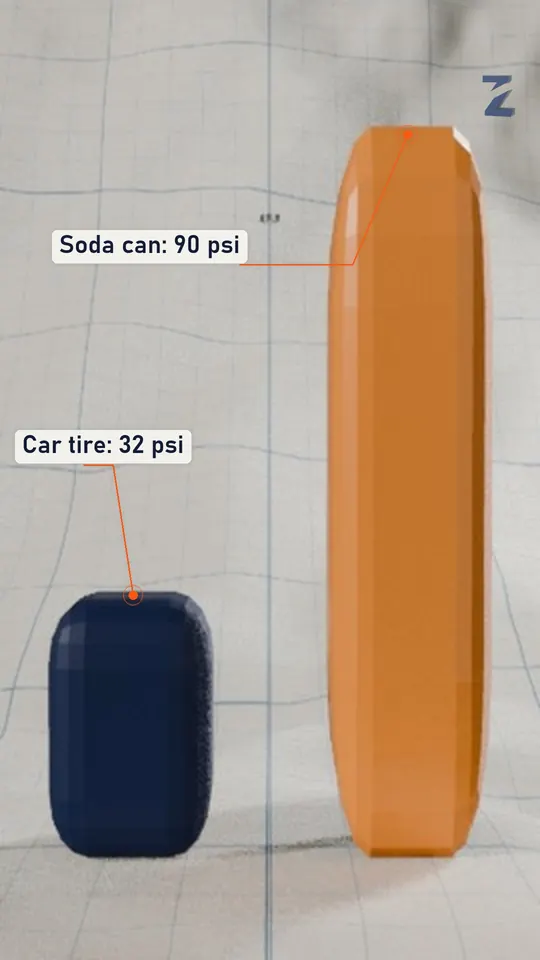
Carbonated drinks are full of dissolved carbon dioxide, which pushes outward on every part of the can. Can makers design for a pressure capacity of about 90 psi. A typical US car tire is inflated to about 32-35 psi, so the can is built for nearly three times that.
Trick one: the domed bottom
Turn a can over and you will see that the bottom is not flat. It curves inward into a dome, and the can stands on a narrow ring around it.
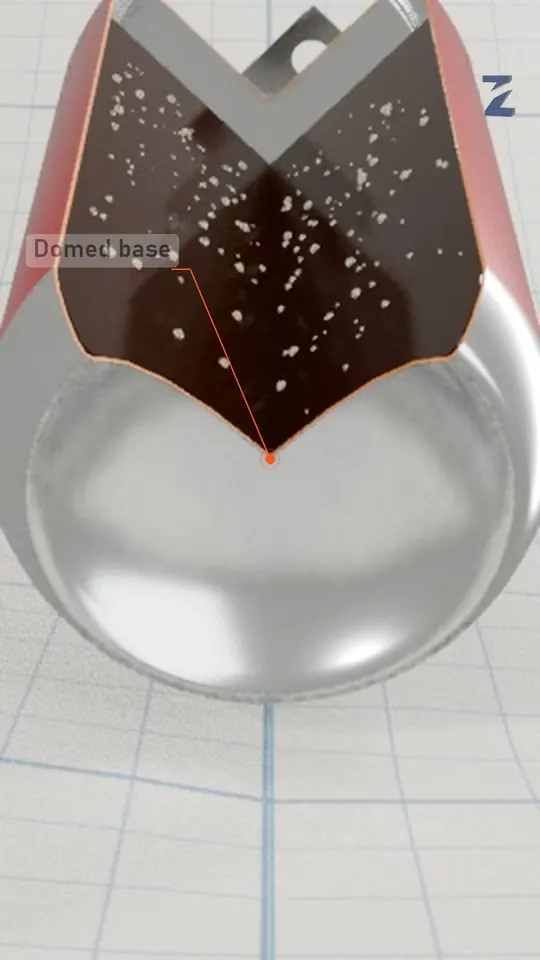
A flat bottom would bulge outward under pressure, and the can would rock and fail. A dome works like an arch: the pressure pushing on the curved surface is spread out along the curve and into the strong rim, instead of pushing one flat panel outward. That is why the bottom is one of the most carefully shaped parts of the can.
Trick two: no side seam
Older food cans were made by rolling a flat sheet into a tube and joining the edges, leaving a seam down the side. A seam is a natural weak line.
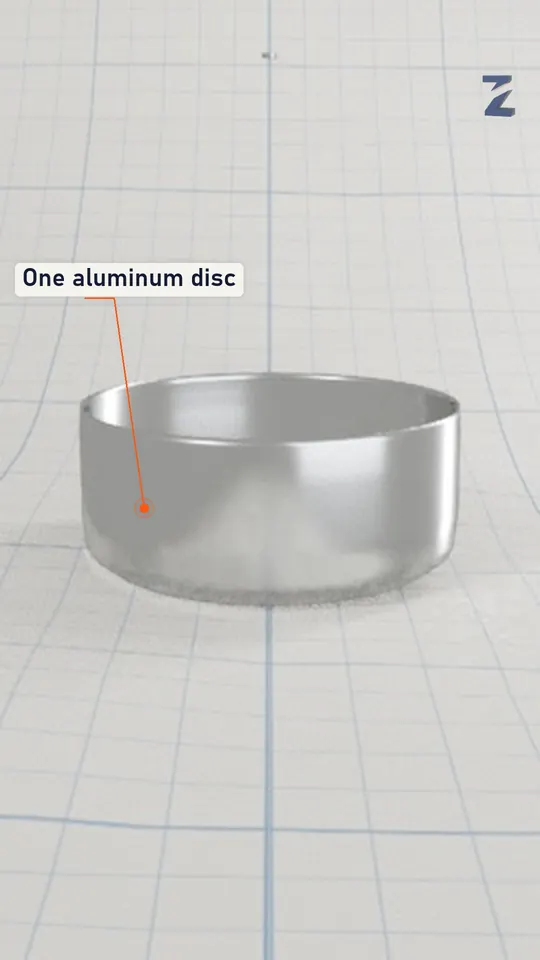
A modern drink can has no side seam at all. The body is pressed from a single round disc of aluminum: first into a shallow cup, then drawn and "ironed" into a tall, thin cylinder. Because the body is one piece, there is no joint along the side where pressure could split it open.
Trick three: a harder lid
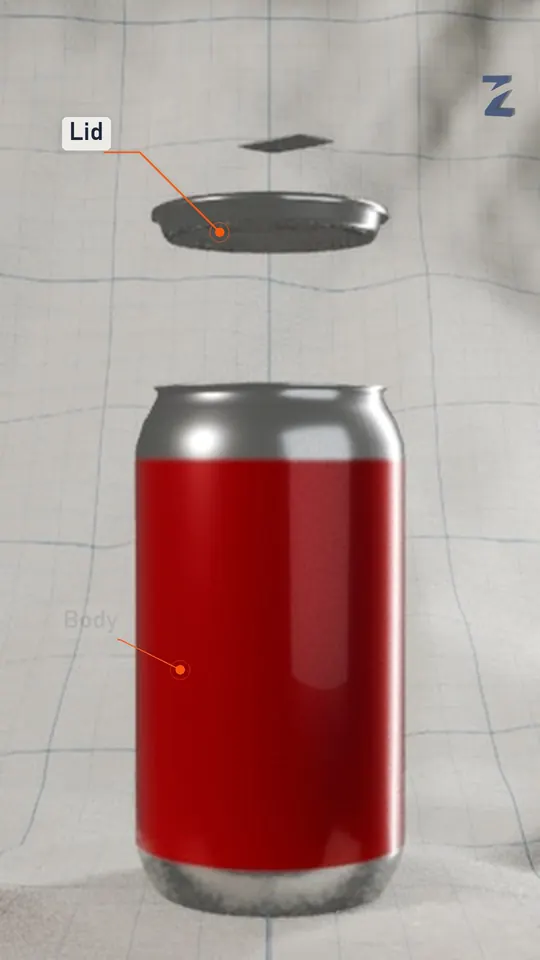
The lid is a separate piece, attached after filling by folding its edge together with the top of the body. It is made from a different, harder aluminum alloy: the body is usually alloy 3004, while the lid is alloy 5182. The lid is also thicker than the wall, and the top of the can narrows so the lid can be smaller. A smaller, stiffer lid holds the pressure and the stress of the opening tab.
So where is the weak spot?
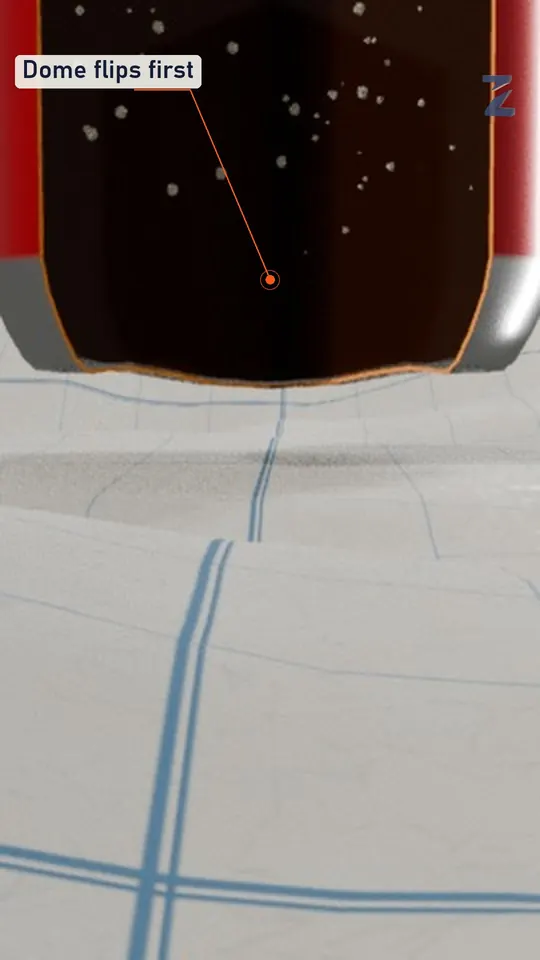
If you push the pressure past about 90 psi, something has to give. According to can patents, the most common failure is the bottom dome "reversing": it flips outward, like a pushed-in lid popping out. This usually happens at around 90-100 psi. The rest of the can, including the paper-thin wall, holds.
That is the clever part of the design. The can is a pressure vessel made with as little metal as possible, and every shape on it, from the dome to the narrowed neck, is there to make that thin metal strong where it needs to be.
Sources
- US Patent 4,412,627: Drawn and ironed can body (side wall about 0.004 in)
- US Patent 4,953,738: One piece can body with domed bottom (about 90 psi design pressure; the dome reverses first)
- Aluminum can, Wikipedia (body alloy 3004, lid alloy 5182)